2026-08-17 · Kaleo Nakamura
What to Do After a Death in Your Hawaii Home: A Complete Cleanup Guide
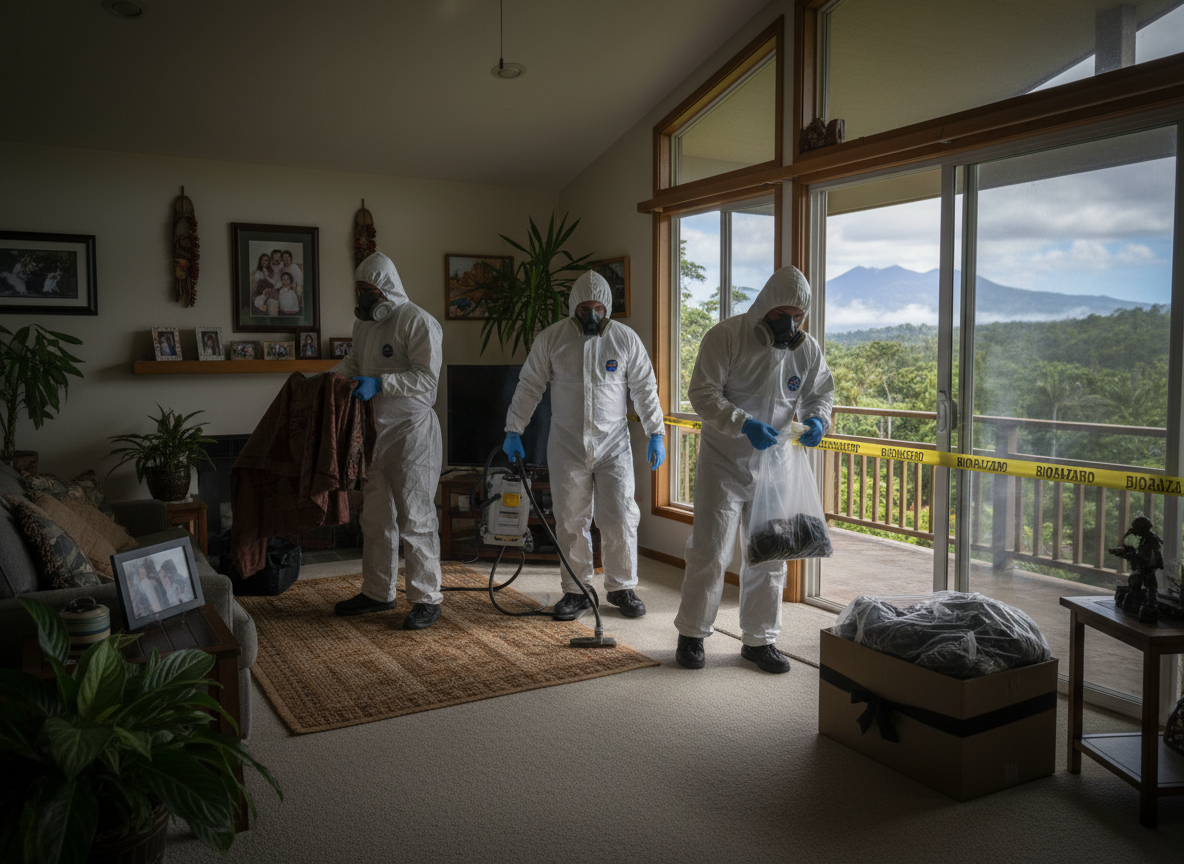
After a death in your Hawaii home, contact emergency services if needed, secure the property, and reach a licensed professional for trauma scene cleanup within hours to limit exposure risks. In Hawaii County, where tropical rainforest conditions with frequent rain and mild temperatures speed decomposition, delays can increase contamination in spaces near Hilo Bay or Liliuokalani Gardens.
Secure the Property and Notify Authorities
Begin by ensuring the area remains undisturbed until law enforcement completes their process, especially in neighborhoods such as Downtown Hilo, Waiakea, or Puueo. Avoid entering rooms with visible fluids or odors to prevent spreading pathogens. Families often wait outside or in unaffected sections while officials document the scene. Once cleared, limit access to essential personnel only. This step protects evidence and reduces health hazards from bloodborne pathogens that thrive in humid environments. Professional teams then assess ventilation needs, as Hilo's consistent moisture can trap odors in enclosed spaces like bathrooms or bedrooms.
Assess Biohazard Levels and Health Risks
Biohazards from bodily fluids require specialized handling because bacteria multiply rapidly in Hilo's warm, wet climate. Visible stains on carpets, mattresses, or walls indicate deeper penetration into subfloors that standard cleaning cannot address. Airborne particles may linger near Rainbow Falls or other humid zones if not contained. Wear protective gear if any inspection occurs, but leave full evaluation to certified crews. Risks include exposure to viruses and bacteria that survive longer in mild temperatures than in drier regions. Document the affected square footage and surfaces for insurance purposes before remediation starts.
Engage Licensed Crime Scene Cleanup Services
Hire a team holding license HI-BIO-2026-XXXXX for crime scene cleanup that follows EPA and OSHA protocols. These experts use hospital-grade disinfectants and HEPA filtration to remove contaminants from porous materials. In Hilo, crews respond from their base at 421 Kalanikoa St and reach properties across Hawaii County within hours for emergencies available 24x7. The process includes removing affected drywall, treating subfloors, and deodorizing with ozone equipment suited to rainforest humidity. Families receive a written scope outlining each phase, from containment to final clearance testing.
Handle Trauma Scene Cleanup and Restoration
Trauma scene cleanup extends beyond visible areas when fluids seep into concrete slabs or wall cavities common in local homes. Technicians test pH levels and apply enzymatic cleaners that break down proteins even after repeated rain exposure. For properties near Waiakea or Puueo, crews coordinate with disposal facilities to transport waste safely. Restoration may involve replacing 200-400 square feet of flooring depending on spread. Homeowners receive guidance on temporary relocation during the 2-5 day average project timeline. This approach restores livable conditions without residual odors that could return during Hilo's frequent showers.
Coordinate Insurance and Follow-Up Steps
Submit photos and the professional report to your insurer promptly, noting that many policies cover trauma scene cleanup as a separate rider. Track all receipts from the licensed provider operating Mon-Sun 8am-8pm for standard scheduling. Schedule a follow-up inspection 30 days later to confirm no regrowth in Hilo's moisture-heavy air. Review local regulations in Hawaii County regarding waste manifests to avoid future liability. Families in Downtown Hilo often combine this with grief support resources while the property undergoes final detailing.